
极速前进
时速达400公里!CR450动车组样车将在年内下线_我的网站

一 | 人民网北京4月19日电 (记者王连香)据中国国家铁路集团有限公司官网消息,“十四五”以来,我国高铁在领跑世界的同时,不断研发新技术,研制新产品。
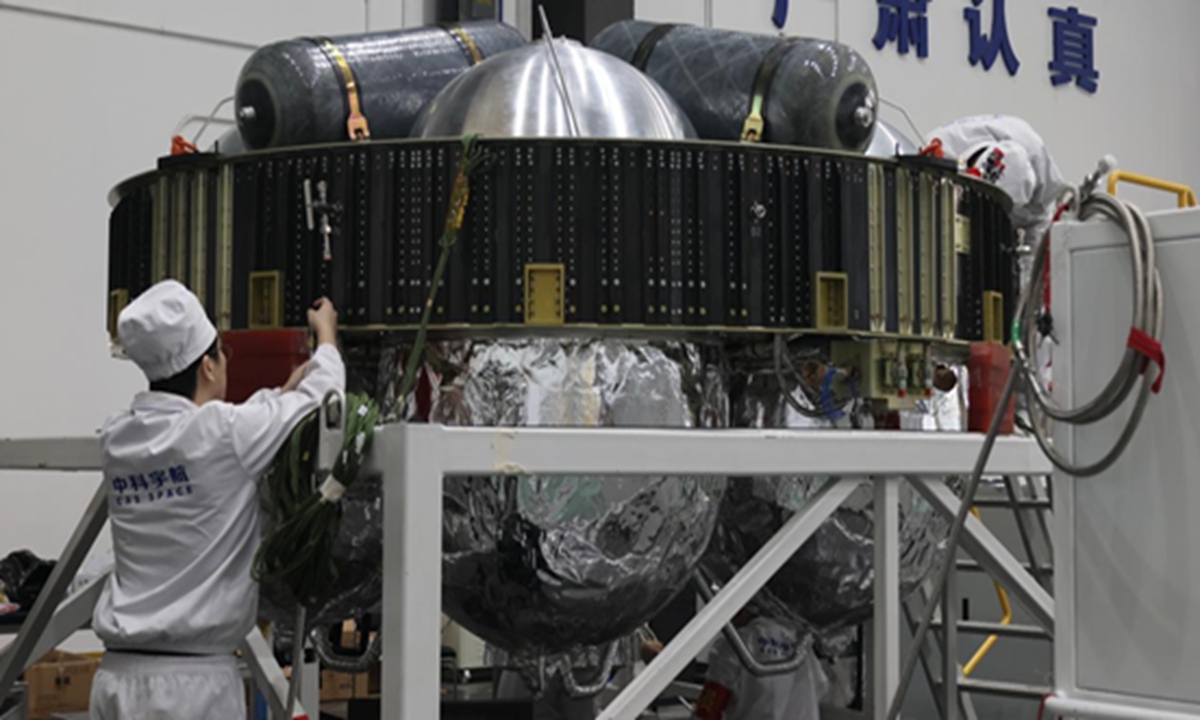
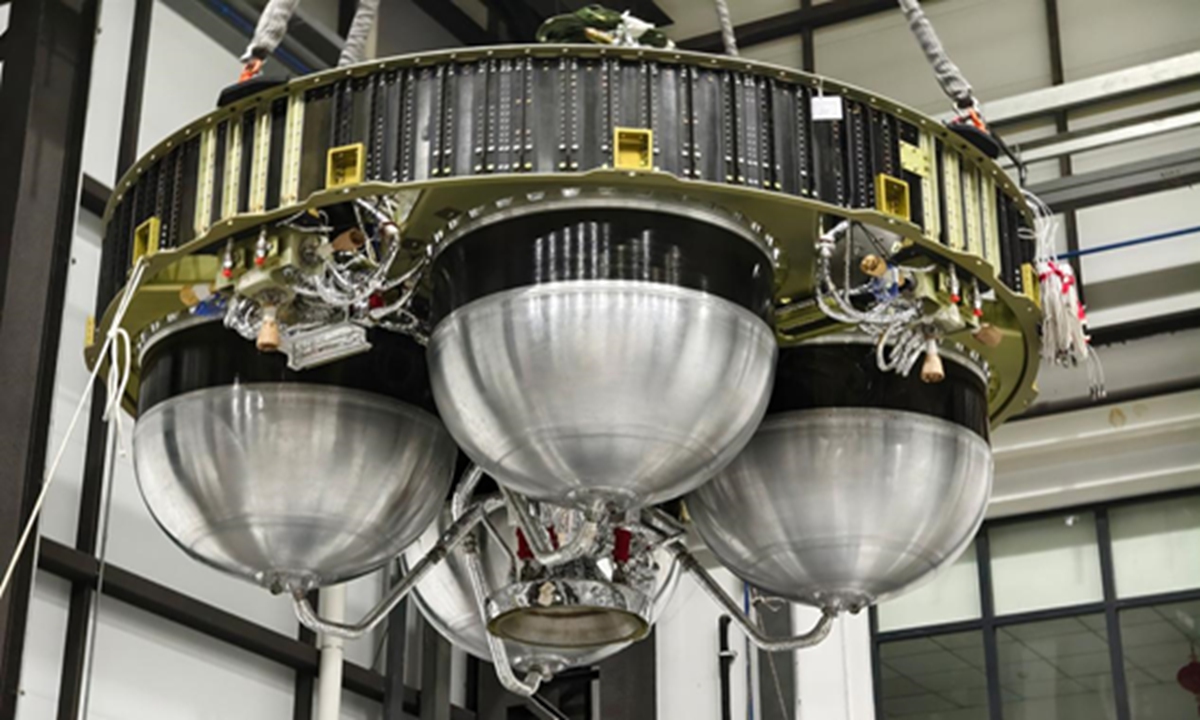
Lixun-1 upper stage, a versatile "space tug" developed by China's commercial space firm CAS Space, is scheduled to make its maiden flight in the first quarter of 2027 after completing a series of key propulsion-system tests, the developer and its chief designer told the Global Times on Tuesday.
The "tug" is designed to ferry satellites from one orbit to another and support missions ranging from constellation deployment to lunar exploration.
While the main stages of a rocket carry payloads from the ground into an initial orbit, an upper stage takes over once the craft is in space. By repeatedly restarting its engine and changing orbit, Lixun-1 can deliver satellites to higher or different orbits, distribute multiple spacecraft to separate destinations during a single launch, or send probes onto trajectories toward the moon and beyond, Global Times learned from the developer.
Yang Haoliang, chief designer of the Lixun-1 upper stage, compared the system to a shuttle service. "If the regular stages of a launch vehicle are like a long-distance bus," - they carry the upper stage and satellites from Earth to a near-Earth parking orbit - the upper stage then takes over as a "space tug," carrying its satellite "passengers" onward to their designated orbital "stops," Yang explained.
That capability can have a direct impact on how efficiently satellites are launched and operated, Yang said. If a satellite has to climb from an initial orbit to its final destination using its own engine, the process can consume a considerable amount of onboard propellant and reduce the fuel available during its operational life. An upper stage can instead perform that orbital transfer, helping conserve satellite fuel and potentially extend its service life.
It can also make one rocket launch do more work. Instead of releasing a batch of satellites into roughly the same orbit, Lixun-1 can repeatedly ignite its engine and maneuver between deployments, sending different satellites to different altitudes and inclinations. Yang said this would help accelerate constellation deployment while improving the efficiency of individual launches.
The practical ambitions behind the system are backed by a major technical milestone reached this month. In August, Lixun-1 completed its PV-001 integrated propulsion-system coordination firing test, during which the entire system operated smoothly for 566 seconds.
Yang told the Global Times that the current Lixun-1 upper stage has a thrust of 20 kilonewtons and can achieve a specific impulse of 315 seconds, which he described as reaching an internationally leading level. The August firing covered the planned profile for the maiden mission, an important step before the system proceeds to flight testing.
The test was more than a demonstration of the engine itself. As an important system-level verification during development, it examined the coordination and engineering reliability of the engine pressurization system, propellant delivery system, propellant management system and servo-control system under the fully integrated configuration.
Of a series of tests that accumulated 5,211 seconds of firing time, the latest one focused on three core technologies: a high-thrust, high-performance 20-kilonewton upper-stage engine capable of multiple starts; balanced propellant delivery from multiple parallel tanks; and a highly reliable integrated electrical system. Their successful verification means Lixun-1 has completed its system-level testing and is ready to move into the flight-test phase, according to the developer.
Lixun-1 has been designed as a modular and generally adaptable upper stage rather than a system tied to only one rocket. It is intended to work with CAS Space's Kinetica-2 and Kinetica-2 heavy-lift variants as well as other launch vehicles, Yang said.
When paired with the Kinetica-2 family, Lixun-1 could significantly expand the rocket's mission range. For communications missions, it could deliver satellites to geosynchronous transfer orbit or even directly to geosynchronous orbit, conserving satellite propellant while supporting the deployment of high-throughput satellites and future 6G communications spacecraft.
For multi-satellite missions, the combination could distribute spacecraft to different orbital altitudes and inclinations during a single launch, potentially serving both low-Earth-orbit constellations and medium- or high-orbit payloads. For deep-space missions, it could place probes onto Earth-moon transfer trajectories and support lunar exploration, Yang said.
The upper stage is designed to be able to conduct more than 20 engine ignitions, autonomously plan orbital-transfer routes and operate under the vacuum and extreme temperature conditions of space. After completing payload deployment, it can also carry out orbital disposal maneuvers to reduce space-debris risks.
Yang said the Lixun-1 and Kinetica-2 combination is designed to cover the vast majority of commercial satellite launch requirements while retaining the ability to participate in major national space projects. More broadly, the upper stage forms part of CAS Space's effort to build launch capabilities reaching medium and high Earth orbits and deep space, extending the reach of China's commercial space sector toward higher orbits and more distant destinations.
。

二 | 由中国国家铁路集团有限公司牵头实施的CR450科技创新工程目前正全面推进,CR450动车组样车将在年内下线。

三 | 2017年9月起,复兴号中国标准动车组CR400型列车在京沪高铁上线运营,以时速350公里打造了世界高铁运营速度的新标杆,CR450动车组是在其基础上的又一次技术突破。根据已知的试验数据,CR450车体的重量大约10吨,比既有的CR400复兴号列车减少12%左右;运行阻力、能耗指标各降低20%;制动性能和牵引效率分别提升20%和3%,让列车在制动距离、噪声、能耗指标不变的情况下,实现运营时速提高50公里,达到时速400公里。CR450科技创新工程主要包括CR450动车组和时速400公里高铁线路、桥梁、隧道等基础设施技术创新;自2021年启动以来,先后完成了17项新技术部件样机研制,搭载CR400综合检测列车开展57项科研试验,创造了动车组明线单列时速453公里、相对交会时速891公里和隧道交会时速840公里新纪录。据了解,目前,时速400公里铁路基础设施技术创新和更高速度综合试验段建设取得重要进展。CR450动车组已完成顶层指标和总体方案制订,进入施工设计和样车研制阶段,样车将在年内下线,并将开展一系列试验。CR450科技创新工程将促进我国高速铁路动车组、基础设施系统技术创新,填补时速400公里高铁技术标准体系空白,相关科研成果将广泛运用于铁路建设和运营领域,进一步提升铁路科技自立自强能力,巩固扩大我国高铁技术世界领跑优势。
Current article:http://qledlh.bomanglangsugangunxileba.cyou/list_dgt53zw/9f4xtp.html
Published on:11:36:59
我的网站最近更新
- 央行:将在8月27日至9月1日开展隔夜逆回购操作 每日操作量不超过6000亿元
- 杨瀚森队友重伤!夏普遭遇右膝半月板撕裂:预计将缺席6个月
- 王慧文回应说,艺术团参与了游戏领域:试一试,不要想太多。
- 《GTA6》最新泄露视频发布!随机事件、死亡画面等
- 盒马在南京成立鲜安美网络科技公司,注册资本1000万
- 亚马尔被换下后不悦,巴萨名宿批评:任何球员都不能这么自私
- 高键会见辽宁省女企业家协会会长黄晓冬一行
- 卫生部暂不建议全民接种M痘疫苗 部分诊所暂停提供接种服务
- 【“十五五”开局看河北】政策赋能激发活力 工业经济平稳增长
- 重庆体彩以公益为笔,绘就九龙坡区乡村幸福生活图景
- Obrador Suggests Americans Living Close to Border Come to Mexico for Cheaper Gasoline
- 宁波富达:上半年归母净利润1.18亿元,同比增长1.78%
- 雄安日记|探访智慧农业“试验田”
- 斯科特:科比在18岁时就立志成为历史最佳 他甚至在黑暗中投篮
- 华为对波兰员工事件的回应:个人原因涉嫌犯罪和终止雇佣关系
- Direct flights between Colombo, Lumbini
- 五年暴涨550%!国产车卖爆全球:前7月出口超7465亿
- 体育荣耀与多元文化的激情碰撞 2024 “冠军之夜” 体育盛典璀璨落幕
- A股午评:创业板指半日跌1.43%,黄金、锂矿、稀土等概念走弱
- 世界杯不能卖!欧足联强硬宣战!国际足联摊上事了
- 旅游酒店概念盘初走强,凯撒旅业等多股涨停
- Several states in Australia ordered to evacuate amid flood alert
- 活力中国调研行|“海上看青岛”文旅新业态
- India Slams UN OHCHR Over Remarks on Activist Teesta Setalvad, Ex-Police Officials' Arrest
我的网站热门资讯
- 小米股东套利近22亿港元,股价下跌2.41%。
- 兰博基尼Fenomeno预告图发布 将于8月圆石滩车展正式亮相
- 新城路、永城街道路维修改造专题会议召开
- 新加坡每年逮捕3000名吸毒者!平均年龄相当于中四学生?
- 三部门发文 推进家庭医生签约服务
- 从“老破小”到“好房子” 西湖区打通居家改造服务“最后一公里”
- 江苏体育局:苏超决赛在南京奥体进行,未来会和各市共同办好联赛
- 2026年婚后备孕储备金怎么准备?R1R2两档稳健对照
- 萨维尼奥同时登上溢价榜和捡漏榜:曼城2150镑买下,8500万镑出售
- 13岁上海女孩靠AI三天赚1.8万 当事人:几乎不懂编程 写作业会分神偷玩手机
- 霍姆格伦:期待马拉帮我们 拒答联盟五大内线
- 外形似大象 日本打造出世界首款可载4人的4足机器人
- 凌晨,新疆哈密突发地震
- 卓创资讯:成本驱动占据主线豆粕价格如何演绎?
- 特锐德:上半年归母净利润4.28亿元,同比增长30.73%
- 2025年京东618宣布,“又好又便宜”的京东618将于5月30日晚8点正式开启。
- 苹果全新 Mac mini 发布:可选 M6 或 M5 Pro 芯片,6999 元起售
- 连续四季不涨反跌!英伟达今夜放榜 该如何克服财报“魔咒”?
- 7分58秒,从死神手里抢人!比任何PB都燃
- 2.5K价位也有5倍潜望长焦,小米17T为你解锁远处美景
- Mirzachowki-Farakka Four Lane: सिर्फ दूरियां ही नहीं घटेंगी, चीन और बांग्लादेश पर भी रहेगी नजर
- “桂花蒸”蒸开西湖景区“明星桂”
- Punjab Crime: पंजाब पुलिस को पठानकोट में मिली बड़ी सफलता, बंबीहा गैंग के चार गुर्गे गिरफ्तार
- 东方嘉盛:上半年归母净利润1.99亿元,同比增长148.95%